The Evolution of Board Games: From Ancient Times to Modern Gaming
Introduction: A Journey Through Time
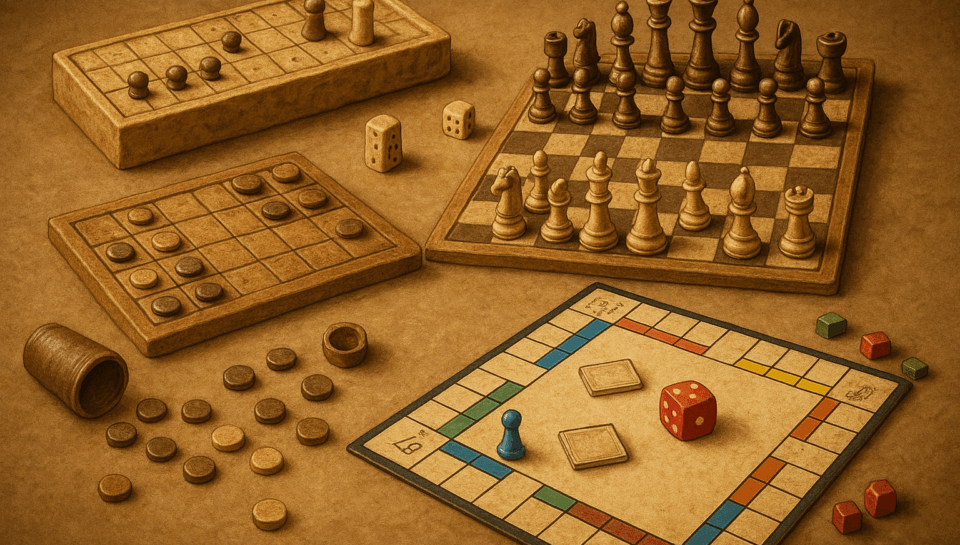
Board games have entertained humanity for thousands of years. From ancient Egypt’s Senet to the strategic complexities of chess, these games have evolved with societies, offering both amusement and intellectual challenges.
The Origins of Board Games
Board games date back to 3000 BC, with ancient civilizations like the Egyptians, Mesopotamians, and Chinese playing them. Games like Senet, Go, and Mancala were more than just pastimes; they were symbolic of life and the afterlife.
The Middle Ages and Strategy Games
The Middle Ages brought the rise of strategy games like chess, a game that mirrored the feudal society of the time. Chess became a symbol of nobility and was used to teach military strategy.
With the advent of the printing press, the 16th century saw an explosion of new games. Backgammon and card games gained popularity, and board games became more accessible to the general public.
The 20th century ushered in classics like Monopoly, Risk, and Scrabble. Today, we see a resurgence of interest in board games, with innovative designs and themes that cater to all age groups.
Conclusion: The Future of Board Games
As technology advances, board games continue to evolve. Whether it’s through digital adaptations or the revival of classic games, the love for board games remains strong.